
By Advanceline Editorial · 20 November 2026 · Conceptual illustration
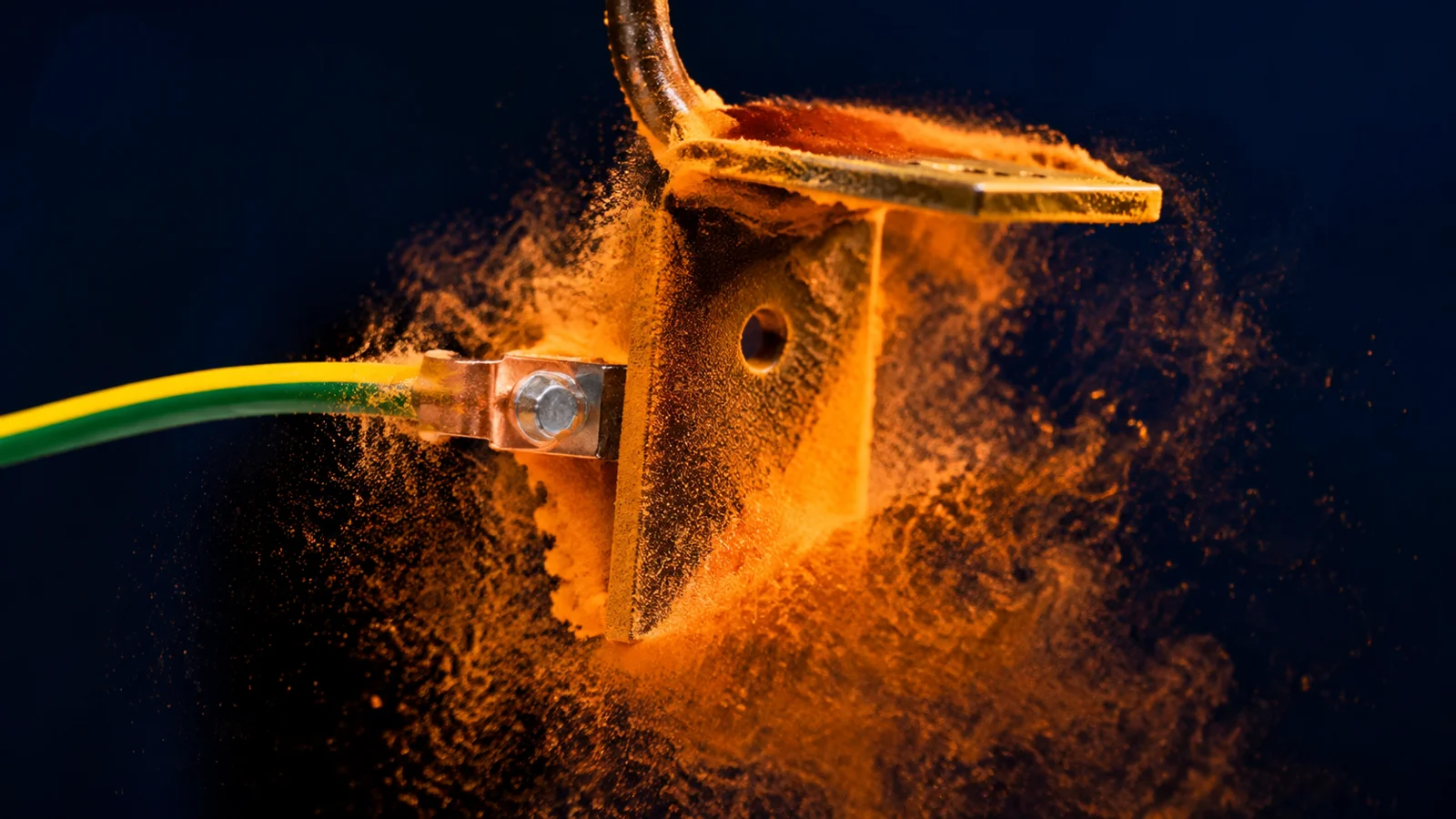
Electrostatic application uses electrical attraction to help deposit dry powder on a grounded metal component. The process combines controlled air movement, powder delivery and high voltage. Good results depend on all three, together with correct preparation and grounding.
Powder movement starts in the hopper
Fluidization air moves through the powder bed to keep powder available for transfer. The goal is stable movement, not excessive agitation. Compressed air quality matters because moisture and oil can interfere with powder handling and coating quality.
From mains power to control power
The reference machine accepts 220V–230V AC at 50/60Hz on a single-phase supply. Its control or solenoid output is 24V DC. This control circuit is distinct from the high voltage generated at the gun. Operators must still follow the equipment safety instructions.
Charging at the gun
A cascade generates high voltage at the gun, with a reference output range of 0–100 kV. Powder particles receive charge as they pass through the application region. The electrical field helps direct charged particles toward the grounded workpiece.
Why grounding matters
Clean hooks and sound electrical contact allow the component to remain grounded. Coating buildup on fixtures can interfere with that path. Grounding must be inspected and maintained in accordance with the equipment instructions and the site safety procedures.
Balancing powder and air
The guide lists a maximum output of 500–600 g/min and an air-pressure range of 0–0.6 MPa. Maximum output is not a universal operating target. Excessive delivery can create overspray or make film control harder. Select settings through controlled trials on representative parts.
After spraying
The deposited layer is not the finished coating. The component must enter a suitable oven and complete the powder supplier’s curing schedule. Cooling and inspection follow. Surface condition, film build and cure should be assessed together.
Frequently asked questions
Why is powder not adhering? Check grounding, powder delivery and approved electrical settings. Can air quality affect the finish? Yes; clean, dry compressed air is an important process requirement. Should voltage remain at maximum? No; part geometry and coating behaviour should guide validated settings.